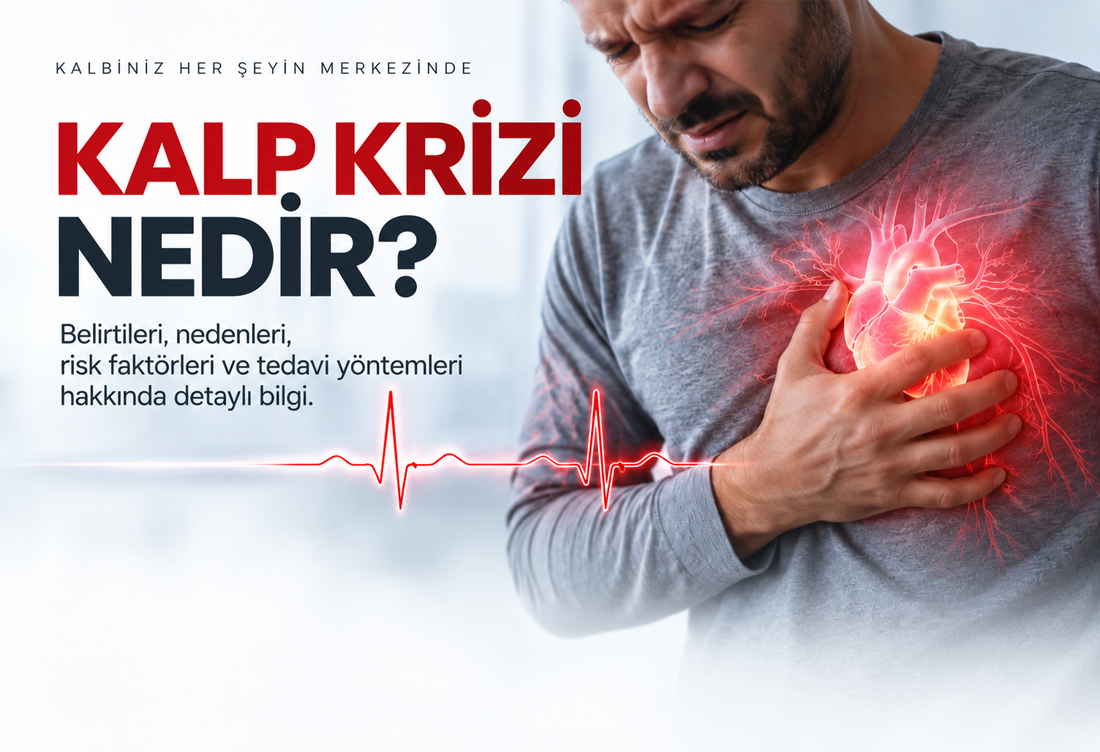
What Is a Heart Attack? Symptoms, Causes and Treatment
A heart attack occurs when blood flow to part of the heart muscle suddenly decreases or stops, causing heart muscle cells to begin to suffer damage. The medical term for this condition is myocardial infarction. The most common cause is disruption of the surface of an atherosclerotic plaque in one of the coronary arteries, followed by formation of a blood clot. The best-known symptom of a heart attack is a feeling of pressure, tightness or heaviness in the chest; however, shortness of breath, cold sweating, nausea and discomfort spreading to the back, jaw or arms may also occur.
A heart attack is a medical emergency. If newly developed chest pressure or tightness suggests a possible heart attack, especially when accompanied by shortness of breath, sweating, nausea, dizziness or pain spreading to the upper body, emergency medical services should be called immediately instead of waiting for the symptoms to pass. Restoring blood flow to the heart muscle at an early stage is important in reducing the amount of heart muscle that may be damaged.
A heart attack does not occur in the same way in every patient. While symptoms are very clear in some people, others may experience complaints that are easier to overlook, such as stomach discomfort, unusual fatigue or mild shortness of breath. For this reason, the assessment of a heart attack is based not only on the severity of pain but also on the characteristics of the symptoms, the person’s risk factors, ECG findings and tests such as troponin.
What Is a Heart Attack?
For the heart to function, the heart muscle needs a continuous supply of oxygen and nutrients. This need is met by the coronary arteries that run along the outer surface of the heart. When blood flow in one of the coronary arteries decreases significantly, the part of the heart muscle supplied by that artery may not receive enough oxygen.
If the disruption in blood flow is not corrected quickly, irreversible damage to heart muscle cells may begin. This damage to the heart muscle is called myocardial infarction.
The most common cause of a heart attack is atherosclerosis developing in the coronary arteries. Over the years, cholesterol-containing plaques may form in the artery wall. If a sudden disruption occurs on the surface of one of these plaques, the body may form a blood clot in that area. If the clot partially or completely blocks the artery, the amount of blood reaching the heart muscle may rapidly decrease.
This is the main reason why early diagnosis and treatment of a heart attack are important. The longer the heart muscle remains without oxygen, the greater the possibility of permanent damage.
What Are the Symptoms of a Heart Attack?
Heart attack symptoms may vary from person to person. One of the most common symptoms is a feeling of pressure, tightness, heaviness or discomfort in the middle of the chest.
Symptoms that may occur during a heart attack include:
- Pressure, tightness or heaviness in the chest
- Chest pain
- Pain or discomfort spreading to the arms
- Pain spreading to the shoulder, back, neck or jaw
- Shortness of breath
- Cold sweating
- Nausea or vomiting
- Dizziness
- Feeling faint
- Sudden weakness
- Unusual fatigue
- Palpitations
A heart attack does not necessarily have to begin with very severe chest pain. Some patients may describe the feeling in the chest as “pressure,” “tightness,” “heaviness” or “as if something is sitting on my chest” rather than pain.
Symptoms may begin suddenly or develop more slowly, decrease and then appear again. Therefore, the temporary disappearance of a complaint does not definitively rule out a heart attack.
What Does Heart Attack Pain Feel Like?
Chest discomfort related to a heart attack is usually felt in the center or center-left area of the chest. Rather than a sharp, pinpoint pain, it is more typically described as pressure, tightness, crushing or heaviness.
Some people may experience burning or indigestion-like discomfort rather than pain. This can cause a heart attack to be mistaken for a stomach problem or reflux.
Heart attack-related discomfort may begin at rest or during physical activity. It is not possible to determine whether a person is having a heart attack based only on the severity of the pain.
Mild chest discomfort may be related to a significant heart problem, while very severe chest pain may also have causes unrelated to the heart.
Where Does Heart Attack Pain Spread?
Discomfort caused by a heart attack may begin in the chest and spread to different parts of the body.
Pain or pressure may spread to:
- The left arm
- The right arm
- Both arms
- The shoulders
- The back
- The neck
- The lower jaw
- The upper abdomen
Although it is commonly believed that a heart attack must cause pain in the left arm, this is not correct. In some patients, the right arm or both arms may be affected. In others, jaw, back or upper abdominal discomfort may be more prominent than chest pain.
Therefore, the absence of left arm pain does not rule out a heart attack.
How Long Does Heart Attack Pain Last?
Chest discomfort related to a heart attack is generally different from brief stabbing sensations lasting only a few seconds. The complaint may continue for several minutes or may decrease and then return.
However, when a heart attack is suspected, it is not appropriate to wait for a specific period of time. An approach such as “I will wait 10 minutes and seek help if it does not pass” may cause a delay, especially when symptoms strongly suggest a heart attack.
If new chest pressure or tightness is accompanied by shortness of breath, sweating, nausea, dizziness or pain spreading to the arm, back or jaw, emergency medical services should be contacted.
Are There Symptoms Before a Heart Attack?
Some people may experience complaints suggesting coronary artery disease before a heart attack, such as chest pressure during exertion, shortness of breath or tiring easily. These symptoms may be related to angina, in which the heart muscle does not receive as much blood as it needs.
However, warning symptoms do not necessarily occur before every heart attack. In some patients, a heart attack may develop without any previous noticeable complaint.
For this reason, the generalization that “a heart attack always gives warning signs days beforehand” is not correct.
Can Heart Attack Symptoms Be Different in Women?
Chest pain or chest discomfort is also one of the most common symptoms of heart attack in women. However, in some women, shortness of breath, back or jaw pain, nausea, weakness and unusual fatigue may occur in addition to chest symptoms or may be more prominent.
Therefore, the statement that “heart attacks do not cause chest pain in women” is not correct. Chest discomfort is also an important symptom in women.
The main point is to understand that a heart attack may not appear with the same symptoms in every person.
What Is a Silent Heart Attack?
A silent heart attack is a myocardial infarction that occurs even though the person does not experience typical heart attack symptoms or does not realize that the symptoms they experienced were caused by a heart attack.
The person may have experienced only:
- Mild chest discomfort
- Weakness
- Shortness of breath
- Nausea
- Stomach discomfort
- Unusual fatigue
These symptoms may be interpreted as a stomach problem, stress or tiredness, and the event may therefore go unnoticed.
Later, tests such as ECG, echocardiography or cardiac imaging may show that damage to the heart muscle may have occurred in the past.
The fact that it was silent does not mean the heart attack was unimportant. In some conditions, particularly diabetes, a heart attack may be more likely to occur with less obvious symptoms.
Can a Heart Attack Happen During Sleep?
Yes. A heart attack may also develop while a person is sleeping or resting. A heart attack does not occur only while running, exercising or performing intense physical activity.
Waking from sleep with chest pressure, shortness of breath, cold sweating or pain spreading to the upper body should be taken seriously.
Chest burning at night may be caused by digestive conditions such as reflux, but a heart-related problem cannot be ruled out simply because the symptom began at night.
Are a Heart Attack and Cardiac Arrest the Same Thing?
No. A heart attack and cardiac arrest are different conditions.
In a heart attack, disruption of blood flow in the coronary arteries causes part of the heart muscle to receive insufficient oxygen and begin to suffer damage.
In cardiac arrest, the heart suddenly stops pumping blood effectively to the body. The person loses consciousness and does not breathe normally.
A heart attack can cause serious rhythm disturbances in some patients and lead to cardiac arrest. However, not every heart attack results in cardiac arrest.
What Causes a Heart Attack?
Atherosclerotic coronary artery disease is the underlying cause of a significant proportion of heart attacks. If the surface of an atherosclerotic plaque that has developed in the artery wall over the years becomes disrupted, a blood clot may form in that area.
The clot may significantly reduce or completely stop blood flow through the coronary artery. As a result, the corresponding area of the heart muscle becomes deprived of oxygen.
However, not every myocardial infarction occurs because of a classic plaque rupture. In some patients, different mechanisms may cause heart muscle damage, including:
- Coronary artery spasm
- Spontaneous coronary artery dissection
- Coronary embolism
- A severe increase in the heart’s oxygen demand
- A severe decrease in oxygen supply in the blood
- Certain serious rhythm disturbances
For this reason, identifying the cause in a patient who has had a heart attack is important for treatment and for reducing future risk.
Who Is at Higher Risk of a Heart Attack?
Heart attack risk is not related to a single cause. More than one risk factor may combine over time and increase a person’s risk of atherosclerotic cardiovascular disease.
Important risk factors include:
- Smoking
- High LDL cholesterol
- High blood pressure
- Diabetes
- Overweight and obesity
- Physical inactivity
- Unhealthy diet
- Chronic kidney disease
- Older age
- Family history of premature cardiovascular disease
- Previous coronary artery disease
Having a single risk factor does not mean that a person will definitely have a heart attack. However, the presence of several risk factors together may significantly increase overall cardiovascular risk.
Why Does a Heart Attack Occur at a Young Age?
Although heart attacks are more common at older ages, they can also occur in young adults. When a heart attack develops at a young age, some different causes may need to be investigated in greater detail in addition to traditional risk factors.
In younger patients, the following may be particularly important:
- Smoking
- Very high LDL cholesterol
- Familial hypercholesterolemia
- Diabetes
- Obesity
- Strong family history
- Spontaneous coronary artery dissection
- Coronary artery spasm
- Certain congenital coronary artery abnormalities
Being young does not completely eliminate the risk of heart attack. Individual risk assessment is particularly important in people with a family history of premature heart attack or very high LDL cholesterol.
What Is STEMI?
STEMI is a type of heart attack associated with certain ST-segment elevations on ECG. In most cases, it is associated with an acute and severe loss of blood flow in a coronary artery supplying part of the heart muscle.
STEMI is a time-critical condition. The main goal of treatment is to restore blood flow as quickly as possible.
In appropriate centers, one of the main treatment methods is primary percutaneous coronary intervention. During this procedure, coronary angiography is performed to identify the blocked artery and, when necessary, blood flow is restored with a balloon and stent.
What Is NSTEMI?
NSTEMI is also a type of heart attack in which heart muscle damage occurs, but there is no persistent ST-segment elevation typical of STEMI on ECG.
In the diagnosis of NSTEMI, the patient’s symptoms, ECG findings and particularly cardiac troponin results are evaluated together.
It is not correct to consider NSTEMI a “mild heart attack.” Depending on the patient’s risk status, early coronary angiography and revascularization may be necessary.
STEMI and NSTEMI are among the major clinical conditions within the spectrum of acute coronary syndrome.
How Is a Heart Attack Diagnosed?
In the diagnosis of a heart attack, the patient’s complaints, examination findings, ECG and cardiac troponin measurements are evaluated together.
One of the main priorities in a patient with suspected heart attack is to determine whether there is a condition requiring urgent restoration of blood flow to the heart muscle.
The main methods that may be used in diagnosis include:
- ECG
- Cardiac troponin
- Physical examination
- Echocardiography
- Coronary angiography
- Additional cardiac imaging methods when necessary
No single test explains the entire diagnostic process in every patient. Findings are evaluated together.
How Is a Heart Attack Detected on ECG?
ECG records the electrical activity of the heart. Disruption of blood flow to the heart muscle may cause various changes on ECG.
In STEMI, ST-segment elevations may be seen in certain leads. In NSTEMI, ST-segment depression, T-wave changes or other findings may occur.
However, ECG does not always have to be clearly abnormal during a heart attack.
Therefore, it is not sufficient to evaluate an ECG simply as “normal” or “abnormal.” It should be interpreted together with the symptoms and troponin results.
If the ECG Is Normal, Does That Mean There Is No Heart Attack?
No. A normal initial ECG does not definitively rule out a heart attack.
Especially in the early stages of symptoms or in some patients with NSTEMI, there may be no obvious changes on the first ECG. If suspicion of a heart attack continues, serial ECG recordings and troponin measurements may be required.
Therefore, a person with serious or newly developed chest pain should not conclude that “there is nothing wrong with my heart” based only on one normal ECG result.
What Is Troponin?
Troponin is one of the proteins found in heart muscle cells. When heart muscle cells are damaged, cardiac troponin may be released into the blood.
For this reason, troponin is one of the most important biomarkers used to detect heart muscle damage.
Today, high-sensitivity cardiac troponin tests are widely used in the assessment of patients with suspected heart attack.
However, troponin elevation does not mean a heart attack by itself. Other conditions that cause damage to the heart muscle can also increase troponin levels.
What Troponin Level Indicates a Heart Attack?
There is no single troponin level that applies to everyone for diagnosing a heart attack. Reference values may vary according to the test method and laboratory.
What matters in diagnosing a heart attack is not only whether troponin is elevated. The rise or fall of troponin over time, the patient’s symptoms and other findings indicating ischemia in the heart muscle are evaluated together.
For this reason, it is not correct to compare a personal laboratory result with a single troponin limit found online and diagnose a heart attack.
If Troponin Is Normal, Does That Mean There Is No Heart Attack?
A normal first troponin measurement may not immediately rule out a heart attack in some situations, especially when symptoms have only recently started.
After heart muscle damage, it may take time for troponin to reach a measurable level in the blood. Although high-sensitivity tests can detect this process earlier, serial measurements may still be performed if clinical suspicion continues.
Therefore, a decision should not be made based only on the first troponin result before the medical evaluation is completed.
Why Is Echocardiography Performed in a Heart Attack?
Echocardiography is an imaging method that evaluates the structure and movements of the heart using ultrasound.
After a heart attack, echocardiography can be used to assess:
- Which areas of the heart muscle are not contracting adequately
- The pumping strength of the heart
- Ejection fraction
- The condition of the heart valves
- Certain mechanical complications
- Fluid around the heart
Determining the heart’s pumping function after a heart attack is important for both treatment and long-term follow-up.
What Is Coronary Angiography?
Coronary angiography is an invasive method that allows direct visualization of the vessels supplying the heart.
A thin catheter is usually advanced into the coronary arteries through the radial artery in the wrist or, in some cases, through the femoral artery in the groin. Contrast material is administered to obtain images of the arteries.
This method allows assessment of:
- Which artery is blocked
- The location of the narrowing
- The degree of narrowing
- How many vessels are affected
- Whether the artery is suitable for stenting
When necessary, balloon angioplasty and stenting can be performed during the same procedure.
When Is Angiography Performed During a Heart Attack?
The timing of angiography depends on the type of heart attack and the patient’s clinical risk.
In STEMI, emergency coronary angiography and primary PCI are among the main treatment methods because the goal is to open the blocked artery as quickly as possible.
In NSTEMI, the timing of angiography is determined according to the patient’s risk status. If there is ongoing chest pain, severe circulatory impairment, serious rhythm disturbance or other high-risk features, an earlier intervention may be required.
In the current approach to acute coronary syndrome, the timing of invasive treatment is individualized according to the patient’s clinical characteristics and risk classification.
How Is a Stent Placed During a Heart Attack?
During coronary angiography, once the blocked or severely narrowed artery causing the heart attack is identified, a thin wire is passed through the narrowed area.
A balloon may be inflated in the appropriate part of the artery to widen the area. A stent may then be placed to help keep the artery open.
A stent is a small metal support structure placed inside the coronary artery.
Today, drug-eluting stents are most commonly used.
After the procedure, regular use of antiplatelet treatment is important to reduce the risk of clot formation inside the stent.
Does Every Heart Attack Require a Stent?
No. Not every patient who has a heart attack receives a stent.
The structure of the coronary arteries seen on angiography, the number of affected vessels, the location of the narrowing, the patient’s general health and the cause of the heart attack determine the treatment choice.
In some patients, a stent is appropriate, while in others bypass surgery may be a better option. In some heart attacks, classic obstructive disease may not be seen in the major coronary arteries.
Therefore, heart attack treatment is not the same for every patient.
When May Bypass Surgery Be Needed in a Heart Attack?
In coronary bypass surgery, new pathways are created for blood to reach beyond severely narrowed or blocked vessels supplying the heart.
Bypass may be considered especially in the presence of:
- Extensive multivessel disease
- Certain left main coronary artery diseases
- Complex coronary anatomy unsuitable for stenting
- Certain accompanying diseases
The choice between stenting and bypass surgery is not based only on the question of “how many vessels are blocked?” The anatomy of the vessels, the patient’s age, accompanying conditions such as diabetes and overall clinical status are evaluated together.
How Is a Heart Attack Treated?
The main goal of heart attack treatment is to restore blood flow to the heart muscle as early as possible and prevent new cardiovascular events.
Depending on the patient’s condition, treatment may include:
- Coronary angiography
- Balloon angioplasty and stenting
- Fibrinolytic treatment in appropriate patients
- Coronary bypass surgery
- Antiplatelet medications
- Anticoagulants
- Cholesterol-lowering medications
- Medications that regulate blood pressure and the workload of the heart
- Treatments for rhythm disturbances
Treatment is planned according to whether the patient has STEMI or NSTEMI, which vessels are affected and the patient’s general condition.
Is Clot-Dissolving Treatment Used During a Heart Attack?
In some patients with STEMI, clot-dissolving medications called fibrinolytics may be used.
However, if primary PCI can be performed within an appropriate period of time, coronary angiography and PCI are generally preferred as the reperfusion method.
In certain situations where PCI cannot be reached within an appropriate time and there are no contraindications, fibrinolytic treatment may be considered.
Because clot-dissolving medications carry a risk of serious bleeding, they cannot be given to everyone.
How Much Damage Does the Heart Suffer After a Heart Attack?
The amount of damage to the heart muscle is not the same in every patient.
The main factors affecting the extent of damage include:
- Which coronary artery is affected
- The location of the blockage
- Whether the vessel is completely or partially blocked
- How long the heart muscle remains without oxygen
- How early blood flow is restored
- The condition of collateral circulation
After a heart attack, echocardiography is used to evaluate the pumping function of the heart.
Can the Heart Recover After a Heart Attack?
How much the heart recovers after a heart attack depends on the extent of the damage.
Heart muscle cells that have died permanently do not return to their previous state, and scar tissue may develop in that area over time. However, some areas of heart muscle that were affected by the heart attack but have not completely lost viability may partially or significantly regain function over time.
For this reason, heart function measured immediately after a heart attack may change in the following months.
Some patients may have normal or near-normal heart function after a heart attack, while heart failure may develop in people with extensive heart muscle damage.
What Are the Complications of a Heart Attack?
Complications of a heart attack may vary depending on the size and location of the affected heart muscle.
Possible complications include:
- Heart rhythm disturbances
- Heart failure
- Cardiogenic shock
- Cardiac arrest
- Heart valve dysfunction
- Mechanical complications of the heart muscle
- Blood clot formation inside the heart
- Recurrent heart attack
The first hours of a heart attack are especially important in terms of serious rhythm disturbances, so close monitoring is performed in the hospital.
Recovery After a Heart Attack
Recovery after a heart attack does not end when the patient is discharged from the hospital. The first weeks and months are important both for recovery of the heart and for reducing the risk of another heart attack.
Key parts of the recovery process include:
- Regular use of medications
- Cardiology follow-up
- Lowering LDL cholesterol to the target level
- Blood pressure control
- Diabetes management
- Smoking cessation
- Healthy eating
- Appropriate physical activity
- Cardiac rehabilitation
In particular, patients with stents may face serious risks if they stop antiplatelet medications on their own.
What Is Cardiac Rehabilitation?
Cardiac rehabilitation is a structured program that supports the patient’s safe return to daily life after a heart attack.
The program does not consist only of exercise. In addition to physical activity, it may include:
- Control of risk factors
- Nutrition
- Smoking cessation
- Medication adherence
- Psychological support
- Healthy lifestyle habits
Referral to cardiac rehabilitation after acute coronary syndrome is an important component of secondary prevention.
Can Another Heart Attack Occur After a Heart Attack?
Yes. Having had a heart attack indicates an increased risk of another heart attack or a different atherosclerotic vascular event in the future.
The atherosclerosis that caused the heart attack is not limited to the area where the stent was placed. Atherosclerotic plaques may also be present in other areas of the coronary arteries.
Therefore, successful placement of a stent does not mean that “heart disease is completely over.”
How Can the Risk of a Second Heart Attack Be Reduced?
The main goal in preventing a second heart attack is to control all modifiable risk factors as much as possible.
For this purpose:
- Smoking should be stopped
- LDL cholesterol should be lowered to the individual target
- Blood pressure should be kept under control
- Diabetes should be managed effectively if present
- Prescribed medications should be taken regularly
- A healthy diet should be adopted
- Appropriate physical activity should be performed
- Cardiac rehabilitation should be considered
- Cardiology follow-up should not be neglected
Secondary prevention after a heart attack is one of the fundamental parts of long-term treatment success.
How Can a Heart Attack and Reflux Be Distinguished?
Reflux and heart attack may cause similar chest complaints in some people.
In reflux, burning that increases after meals, a bitter or sour taste in the mouth and discomfort that worsens when lying down may be more common. In a heart attack, pressure, tightness or heaviness and discomfort spreading to the upper body may be more typical.
However, these features do not provide a definite distinction.
A heart attack can also feel like heartburn or indigestion. Therefore, new chest discomfort that has not been experienced before or is different from the person’s usual stomach complaints should not be assumed to be reflux.
How Can a Heart Attack and Panic Attack Be Distinguished?
A panic attack may cause chest pain, palpitations, shortness of breath, sweating, dizziness and intense fear. Some of these symptoms may also occur during a heart attack.
Intense fear and rapid breathing may be more prominent in a panic attack, while chest discomfort in the form of pressure or tightness and spreading to the upper body may be more suggestive of a heart attack.
However, a definite distinction cannot be made at home.
Especially when a serious chest complaint occurs for the first time, it should not be dismissed as “just a panic attack.” A heart attack itself may also cause severe fear and anxiety.
When Should Emergency Medical Services Be Called?
If newly developed chest pressure, tightness, heaviness or pain suggests a heart attack, emergency medical services should be called without waiting for the symptoms to pass.
Urgent evaluation is particularly important if chest discomfort is accompanied by:
- Shortness of breath
- Cold sweating
- Nausea or vomiting
- Dizziness
- Feeling faint
- Pain spreading to the arms
- Pain spreading to the back
- Discomfort spreading to the jaw or neck
The person should seek help from emergency medical services rather than attempting to drive themselves to the hospital.
If the person loses consciousness and is not breathing normally, cardiac arrest should be suspected. In this situation, emergency medical services should be called and basic life support should be started if possible.
Can a Heart Attack Be Prevented?
It is not possible to reduce the risk of heart attack to zero because there are factors that cannot be changed, such as age and genetic predisposition. However, controlling modifiable risk factors can significantly reduce the risk.
To protect heart health:
- Do not smoke
- Keep LDL cholesterol under control
- Monitor blood pressure
- Manage diabetes effectively if present
- Exercise regularly
- Maintain a healthy body weight
- Prefer a Mediterranean-style diet
- Have cardiovascular risk assessed when necessary
The goal of preventing a heart attack is not only to correct a single laboratory value, but to reduce overall cardiovascular risk.
Frequently Asked Questions
Can a person talk while having a heart attack?
Yes. A person having a heart attack may be conscious, able to speak and even able to walk. Being able to talk does not rule out a heart attack.
What Is Blood Pressure During a Heart Attack?
There is no single blood pressure value that applies to every heart attack. Blood pressure may be high, normal or low. If severe heart muscle damage or cardiogenic shock develops, blood pressure may fall significantly.
What Is the Heart Rate During a Heart Attack?
The heart rate may be normal, fast, slow or irregular during a heart attack. It is not possible to diagnose a heart attack based on a specific pulse rate.
Can Heart Attack Pain Come and Go?
Yes. Chest discomfort caused by a heart attack may be continuous or may decrease and then return. Temporary improvement in symptoms does not rule out a heart attack.
Does a Heart Attack Only Cause Left Arm Pain?
No. Pain may spread to the left arm, right arm, both arms, shoulders, back, neck or jaw. Some patients may not experience arm pain at all.
Can a Heart Attack Cause Nausea?
Yes. Nausea and vomiting may occur during a heart attack. If they are accompanied by chest pressure, sweating, shortness of breath or pain spreading to the upper body, urgent evaluation is required.
Can a Heart Attack Occur With a Normal ECG?
Yes. The first ECG may be normal, especially in NSTEMI or during the early stages of symptoms. If clinical suspicion continues, serial ECG and troponin measurements may be required.
Does Elevated Troponin Definitely Mean a Heart Attack?
No. Troponin indicates damage to the heart muscle, but it may also be elevated in conditions other than a heart attack. Diagnosis is made by evaluating the change in troponin together with clinical findings and other tests.
Does Everyone Who Has a Heart Attack Need a Stent?
No. The need for a stent depends on the anatomy of the coronary arteries, the location of the blockage, the type of heart attack and the patient’s overall condition. Some patients may require bypass surgery or other treatments.
Does the Risk of Heart Attack Completely Disappear After a Stent?
No. A stent treats the existing critical narrowing but does not eliminate the tendency toward atherosclerosis. Regular medication use and control of risk factors remain important in preventing future cardiovascular events.